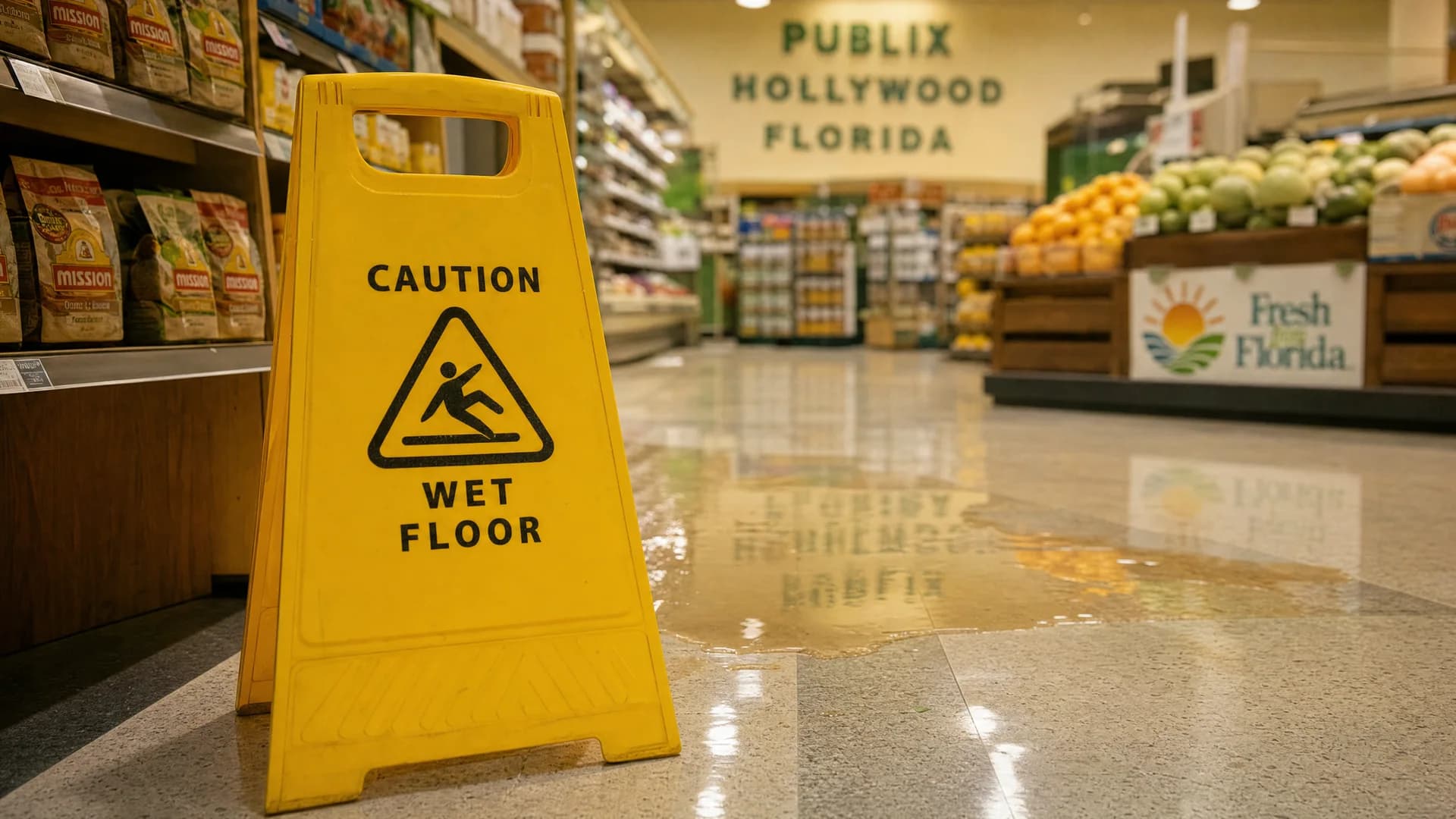
Slip and Falls in South Florida: What the Law Actually Requires
Slip and falls in Florida require proving the business knew about the hazard. I build the evidence case fast. Free consult, 7 days a week.
Slip and fall claims are among the most common personal injury cases in South Florida, and among the most poorly handled. They happen on wet grocery store floors, slick hotel pool decks, and greasy restaurant entrances. The fall takes a second. The injury can take years to resolve. I handle these cases across Palm Beach, Broward, and Miami-Dade counties, and I have seen how fast insurers move to cut your claim down before you even understand what your injuries are worth. If you or someone you know got hurt in a slip and fall on someone else's property, the choices you make in the first 24 hours can shape everything that follows. This guide covers exactly how Florida law works, what you need to prove, and how I approach these cases from the moment you call me.
What Florida Law Actually Requires in Slip and Fall Cases
Florida holds injured people to one of the toughest slip and fall standards in the country. Under Fla. Stat. §768.0755, when a fall involves a transitory foreign substance, such as a wet floor, a spill, or a slick patch, the burden lands squarely on you. You must prove the business had actual knowledge of the hazard, or constructive knowledge, meaning the condition existed long enough that a reasonable business should have caught it. That standard shapes everything about how I build a case. Constructive knowledge can be shown two ways: the condition sat there long enough before the fall, or it happened so regularly that it was foreseeable. That is why maintenance logs, inspection records, employee schedules, and surveillance footage all become critical pieces of evidence. The moment I am retained, I send a preservation letter to the property owner, before that footage gets overwritten and disappears. Under §95.11(5)(a), a negligence claim that accrued on or after March 24, 2023 must be filed within two years. Miss that deadline and the case is over.
The Knowledge Burden: What You Have to Prove
The actual-versus-constructive knowledge question is where most slip and fall cases are decided. Actual knowledge is simple: a store employee saw the spill, caused it, or was told about it and did nothing. Constructive knowledge is harder to prove and far more common. It comes down to time and pattern. If a puddle formed under a refrigeration unit that leaked every afternoon for three weeks, a jury can find the store should have known. If a wet floor mat sat at an entrance for two hours during a rainstorm, that timeline supports constructive knowledge. Before the Florida Legislature enacted §768.0755 in 2010, the law was friendlier to plaintiffs. Under Owens v. Publix, 802 So. 2d 315 (Fla. 2001), once a plaintiff showed they fell on a foreign substance, the burden shifted to the business to prove it exercised reasonable care. The Legislature reversed that. Today, the burden stays on the plaintiff. I tell you this not to discourage you. I tell you because you need to understand why preserving evidence on day one is not optional.
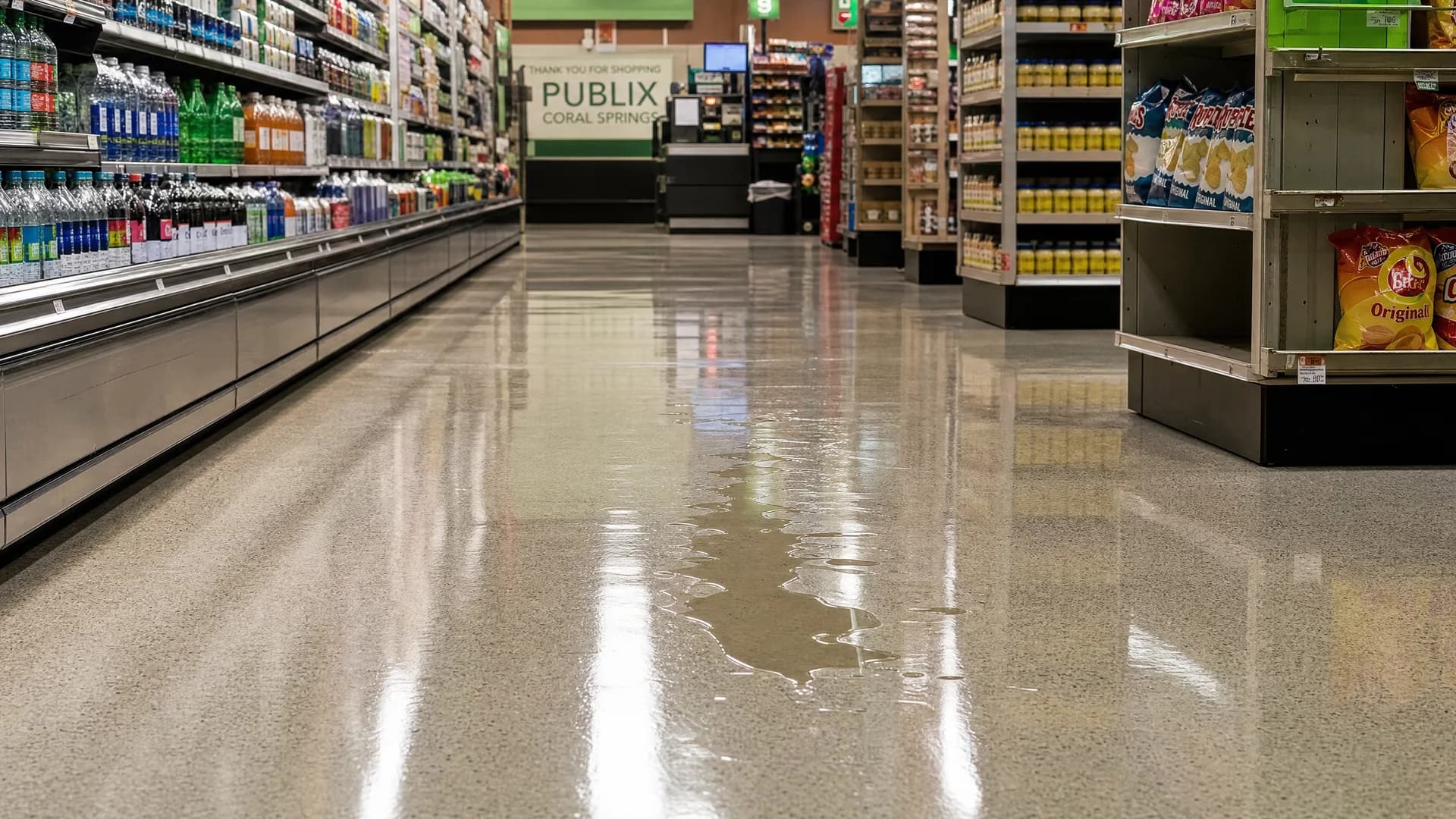
- Surveillance Footage. Video is the single most important piece of evidence. It shows how long the condition existed and whether any employee walked past it. I send a written preservation demand the same day I'm retained.
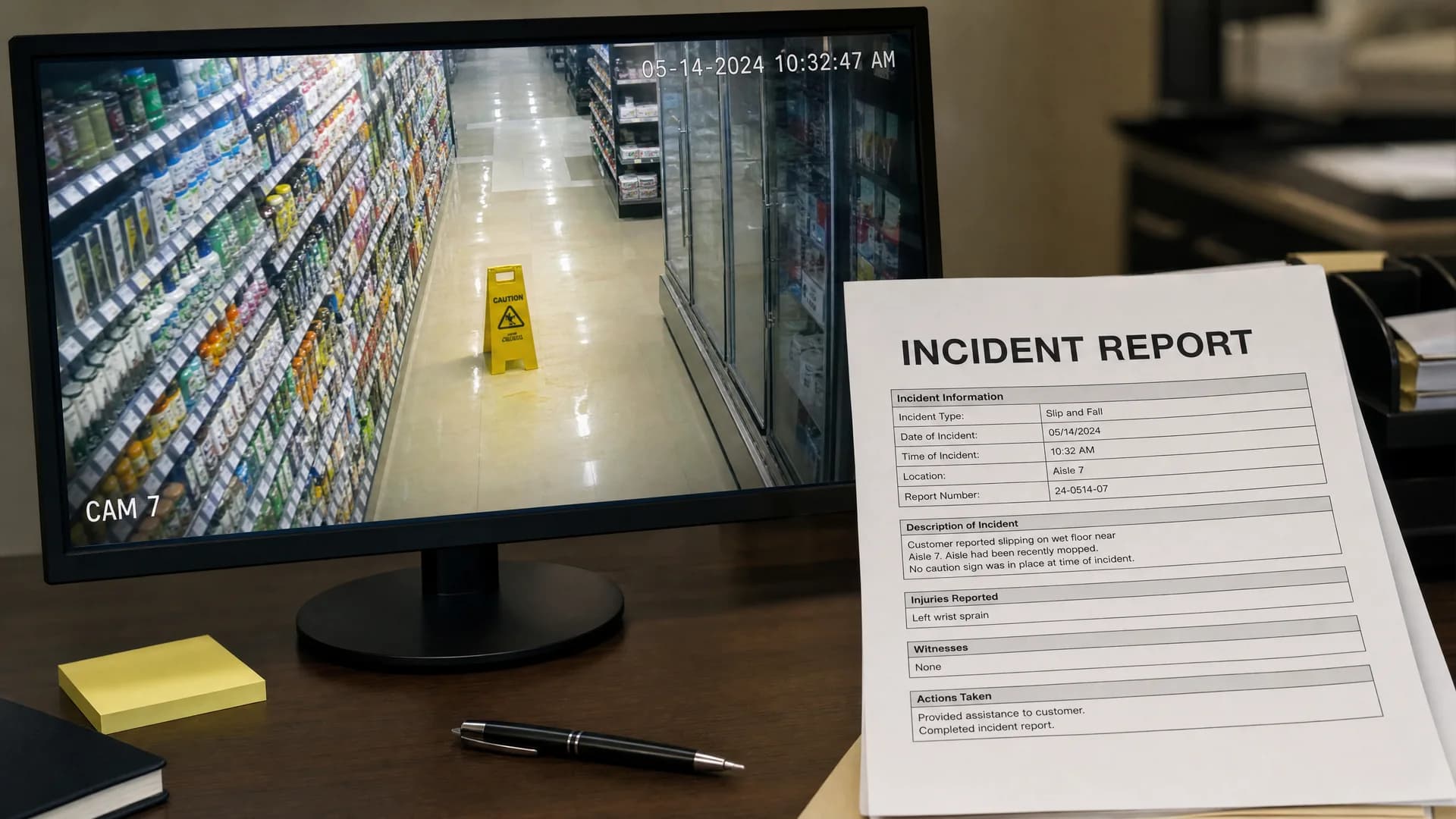
- Incident Reports. Ask for a copy at the scene. The business's own report documenting the fall is an admission that it happened. Never leave without requesting one.
- Witness Information. Collect names and phone numbers of anyone who saw the fall or the hazard before it. Witnesses who weren't employees often provide the most credible testimony about how long the condition existed.
- Medical Records. Document every injury from the first emergency visit forward. Gaps in treatment give insurers ammunition to argue you weren't really hurt, or that your injury came from something else.
- Photos of the Scene. Take them immediately, before the spill is cleaned up. Angle, lighting, and the absence of warning signs are all visible in a photo and difficult to dispute later.
How Comparative Fault Affects Your Recovery
Florida uses modified comparative negligence under §768.81(6). If a jury finds you were 30% at fault for your own fall, your recovery drops by 30%. If they put you at 51% or more, you walk away with nothing. That is not a hypothetical. Insurance adjusters are trained to argue you were distracted, wearing the wrong shoes, or ignoring an obvious hazard. I have seen an adjuster open a claim conversation by asking whether the plaintiff was looking at their phone. The defense starts building a comparative fault case from the moment the incident happens. That is exactly why the open-and-obvious hazard argument matters. Under Florida law, a visible hazard may reduce or eliminate the owner's duty to warn. It does not, however, automatically wipe out the owner's separate duty to keep the premises in a reasonably safe condition. Middleton v. Don Asher & Assocs., 262 So. 3d 870 (Fla. 5th DCA 2019) confirms that comparative fault, not a complete bar, is usually the outcome when a hazard was visible. An obvious spill can still support a valid claim. The case gets harder. It does not die.
Handling It Yourself vs. Hiring Representation
| Factor | Self-Represented Claimant | Represented by Sean Goldstein |
|---|---|---|
| Evidence Preservation | You may not know what to request or when | Preservation letter sent same day, before footage is overwritten |
| Knowledge of §768.0755 Burden | Often unknown; claim under-documented | Case built around constructive/actual knowledge from day one |
| Comparative Fault Defense | Difficult to counter adjuster's framing without legal knowledge | Active rebuttal to any attempt to shift fault above 50% |
| Medical Lien Negotiation | Health providers paid full rate out of settlement | Liens negotiated to maximize net recovery for client |
| Filing Deadline Tracking | Two-year deadline easy to miss; no safety net | Deadline calendared immediately; no risk of waiving the claim |
| Access to the Attorney | No attorney access | You work directly with me, not a rotating cast of case managers |
An Honest Admission About Slip and Fall Claims
I'll be honest about something I got wrong early on. I used to think that if someone was genuinely hurt on another person's property, there was almost always a claim worth pursuing. I was wrong. Some slip and falls involve conditions that simply do not meet the legal standard for liability. Consider a spill that happened ninety seconds before you rounded the corner, with no prior incidents, no pattern, and surveillance showing an employee already on the way to clean it. That is a hard case, not impossible, but hard. The honest answer is that some claims I review do not go forward, not because the injury was not real, but because the evidence does not support the burden of proof. I say that upfront, at the free consultation, not after months of work have passed. That is the kind of counsel I would want if I were the one who fell. It is also why looking at the Florida Bar's consumer guidance on hiring a personal injury attorney is worth your time before you decide who to call.
- Free Consultation. You tell me what happened. I ask about the location, the substance, what you saw, what witnesses said, and what medical care you've had. I give you a straight assessment of the claim's strength, not a sales pitch.
- Evidence Preservation. I send a written preservation letter to the property owner and their insurer the same day I'm retained. This puts them on legal notice to retain surveillance footage, incident reports, maintenance logs, and inspection records.
- Medical Documentation. I help you understand why consistent medical treatment matters. Gaps in care are used against you. I coordinate with treating providers and, where appropriate, connect you with specialists who can properly document the injury.
- Demand and Negotiation. Once your medical treatment is complete or at maximum medical improvement, I prepare a demand package: medical records, bills, lost wage documentation, and a liability analysis. I negotiate directly with the insurer.
- Litigation if Needed. If the insurer won't pay a fair amount, we file suit. Cases move through the Florida court system with discovery, depositions, and ultimately trial or a mediated resolution. I handle your case personally at every step, with my team supporting the work behind the scenes. You are not handed off to a rotating cast of case managers.
Slip and Falls vs. Trip and Falls: Different Legal Paths
People use "slip and fall" and "trip and fall" as if they mean the same thing. In Florida, they do not. A slip and fall tied to a transitory foreign substance, such as a wet floor, a spilled drink, or a tracked-in puddle, carries a specific statutory knowledge burden under Florida law. A trip and fall on a permanent structural condition, such as a raised sidewalk seam, a broken stair, or a pothole, follows common-law premises duties instead. That distinction matters a great deal. In a structural trip case, I do not have to prove the business knew about a passing spill. I have to show the condition was unreasonably dangerous and that the property owner knew or should have known about the defect. Both types of cases demand careful investigation. The evidence I look for, however, is different in each one. Other injuries on commercial property, including animal attacks and child injuries on unsafe premises, follow their own liability frameworks entirely. I handle all of them across South Florida.
What Damages Are Available in a Slip and Fall Claim
Damages in a slip and fall case split into two broad categories. Economic damages cover your real out-of-pocket losses: emergency room bills, follow-up care, physical therapy, lost wages during recovery, and projected future medical costs if your injury is permanent. Noneconomic damages cover pain and suffering, loss of enjoyment of life, and the strain on your relationships. Florida does not cap compensatory damages in ordinary negligence cases. Punitive damages are rare in slip and fall claims, but they are possible in extreme situations. Under §768.73, punitive damages are generally capped at the greater of three times compensatory damages or $500,000. A higher cap applies when the conduct was driven solely by unreasonable financial gain and management actually knew about the risk. The insurer will have its own number for what your claim is worth. That number is built to protect the insurer, not you. Part of my job is making sure the full picture of your damages, including future costs, is properly documented before any figure lands on the table.
Frequently asked questions
What must I prove in a Florida slip and fall case?
How long do I have to file a slip and fall lawsuit in Florida?
Can I still recover if I was partly at fault for the fall?
Does an 'open and obvious' hazard kill my claim?
What is the difference between a slip and fall and a trip and fall?
What does it cost to hire a slip and fall attorney in Florida?
Should I accept the insurer's first settlement offer?
Ready to get started?
Reach out today for a fast, no-pressure quote.
This page is for general informational purposes and is not professional, legal, or medical advice. Sean Goldstein can advise on your specific situation, contact us for a consultation. Licensed: FL Bar #1018013.