Child Injuries: Florida Legal Guide for Injured Families
Child injuries caused by negligence deserve serious legal action. Sean Goldstein handles child injury claims across South Florida.
When a child is seriously hurt because of someone else's negligence, here is what your family needs to know first: Florida law gives you the right to file a claim on your child's behalf right now. Waiting can cost you that right.
At Sean Goldstein, I focus on catastrophic and serious personal injury claims across Palm Beach, Broward, and Miami-Dade counties. Child injury cases sit at the crossroads of Florida law, pediatric medicine, and high-stakes insurance negotiations. I handle your case personally and stay involved at every stage. You work directly with me, not a rotating cast of case managers, and my team supports the case behind the scenes. When there is a deposition, I am the one in the room.
If your child was hurt at a playground, a school, a neighbor's property, in a car crash, or by a dangerous product, call me. I want to hear what happened.
What Are Child Injuries in a Legal Context?
Child injuries in Florida personal injury law means more than a scraped knee. It means harm caused by a third party's negligence. Examples include a defective piece of playground equipment, a property owner who failed to fence a pool, a distracted driver who struck a school bus, or a daycare that ignored a known hazard.
Florida law recognizes that children cannot sue on their own behalf. A parent or court-appointed representative must bring the claim. That distinction matters a great deal when it comes to timing.
Fla. Stat. §95.11(5)(a) sets a 2-year statute of limitations for negligence claims that accrued on or after March 24, 2023. That clock typically starts running from the date of injury, not when the child turns 18. If a parent is available to sue, Florida's minority tolling rule under §95.051 is narrow and usually does not extend the deadline. Missing that window means losing the claim entirely.
How Is Negligence Established in a Child Injury Case?
Every Florida negligence claim requires four elements: duty, breach, causation, and damages. Child cases use the same framework. What shifts is how courts weigh each piece.
A property owner's duty to a child visitor is often higher than the duty owed to an adult. The attractive nuisance doctrine is where that difference shows up most clearly. If a dangerous condition, like an unfenced pool, a piece of heavy machinery, or an unlocked gate, was likely to draw children in, and the owner failed to take reasonable precautions, that owner can be held liable. This can hold true even if the child was technically trespassing at the time.
Florida also applies modified comparative fault under Fla. Stat. §768.81. A party found more than 50% at fault recovers nothing. In child cases, courts look at whether the child had any real capacity to protect themselves. A 4-year-old is judged by a very different standard than a 14-year-old. Those distinctions matter, and they tend to surface during discovery, in deposition testimony, expert reports, and medical records pulled from the file. That is where cases are shaped or lost.
- Residential and Commercial Pools. Florida's pool barrier law requires specific fencing and gate standards around residential pools. A property owner who fails to meet those standards can face significant liability when a child drowns or is seriously hurt. South Florida's year-round warm climate means pools are a persistent hazard in Broward, Miami-Dade, and Palm Beach counties.
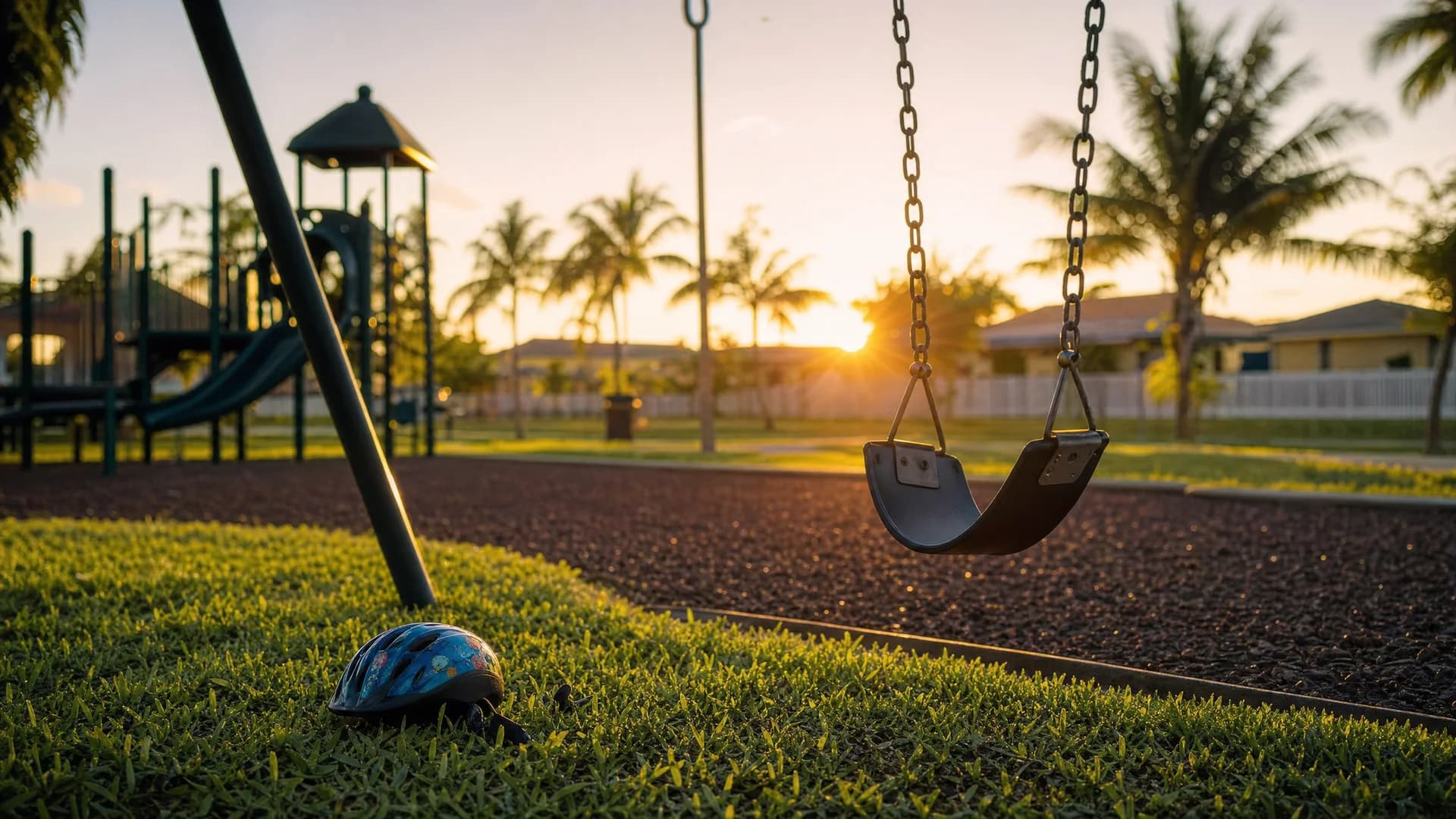
- Playgrounds and Public Parks. Defective equipment, poor maintenance, inadequate surfacing, or improper age-grading on playground equipment can create liability for municipalities, HOAs, and commercial operators. A broken bolt or a platform without proper guardrails is a structural failure, not an accident.
- Schools and Daycares. Schools and daycares hold a duty of supervision over children in their care. That duty covers everything from cafeteria slip-and-fall hazards to inadequate staff ratios during outdoor play. Claims against public schools in Florida require additional procedural steps under the sovereign immunity statute.
- Motor Vehicle Crashes. Children injured as passengers, pedestrians, or cyclists by a distracted or negligent driver can sustain catastrophic injuries. These cases often involve both a personal injury claim and, where applicable, an uninsured motorist claim. See our Car Accidents page for the vehicle-specific framework.
- Animal Attacks and Dog Bites. Florida imposes strict liability on dog owners when their dog bites a child in a public place or lawfully on private property. Children's faces, hands, and necks are disproportionately targeted by dog bites, making injuries severe. See our Animal Attacks page for how these claims work.
What Compensation Can a Child Injury Claim Recover?
Damages in a serious child injury case are often larger than in a comparable adult case. A child's loss reaches forward across decades. That scope matters.
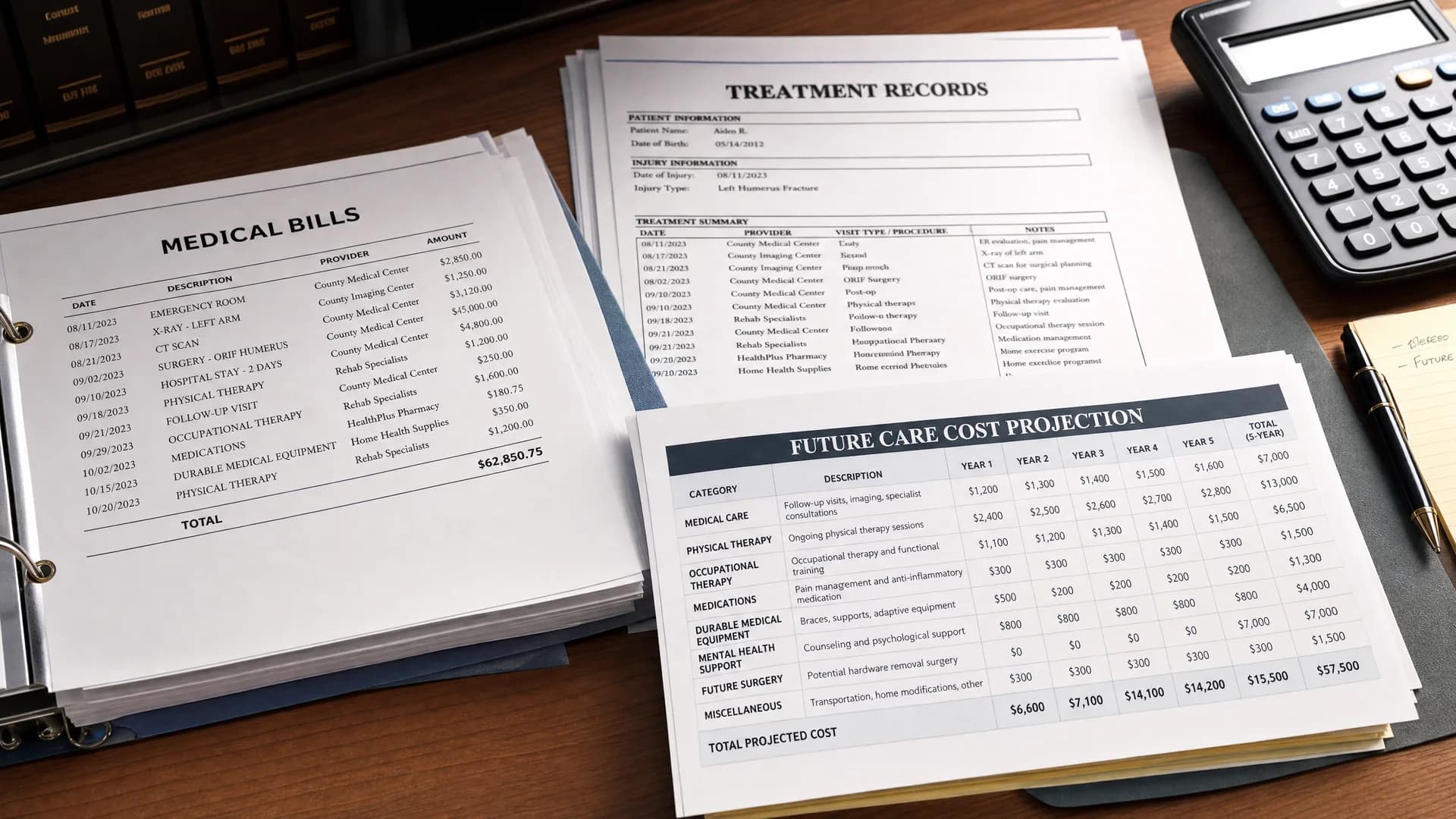
Past and future medical expenses form the foundation. Those cover hospital bills, surgical costs, rehabilitation, physical therapy, psychological counseling, and long-term care. A child who suffers a permanent injury can also seek compensation for future lost earning capacity, what they would have earned over a lifetime but can no longer earn. Pain and suffering, loss of enjoyment of life, and permanent disfigurement are compensable as well.
In egregious cases, punitive damages are available under Fla. Stat. §768.73. The general cap is the greater of three times compensatory damages or $500,000. Where the conduct was driven solely by unreasonable financial gain and the risk was actually known, that cap rises to four times compensatory damages or $2 million.
A parent can bring their own claim as well. That claim can include out-of-pocket medical expenses the parent paid and the loss of the child's services during minority. It carries its own two-year filing window, separate from the child's claim.
How Court Approval and Guardian Rules Affect a Child's Settlement
Florida has specific rules that protect a child's settlement money. Under Fla. Stat. §744.301, a natural guardian, typically a parent, can receive and manage proceeds on the minor's behalf without court involvement when the total is $15,000 or less.
Once the net settlement to the minor exceeds $15,000, a legal guardianship of the property is required under §744.387. And if a lawsuit has already been filed, no settlement is valid without court approval, regardless of the dollar amount.
For any gross settlement reaching $50,000 or more, §744.3025(1)(b) requires the appointment of a guardian ad litem. That is a court-appointed advocate who reviews the settlement before the judge approves it. The court also has discretion to appoint one when the gross exceeds $15,000.
These rules exist for good reason. They make sure the money actually reaches the child rather than getting absorbed by family debt or mishandled along the way. I walk every family through each step of this process, with no surprises at the approval hearing.
My Hot Take: Most Child Injury Cases Are Settled Too Early for Too Little
I'll say what most attorneys won't: the biggest mistake families make in child injury cases is not the lawsuit itself. It's accepting a settlement before the full picture of the injury is clear.
Insurance adjusters are trained to close files fast. They offer a number that feels large to an overwhelmed family but does not account for what a serious pediatric injury costs over a lifetime of medical care, therapy, and lost opportunity. Future lost earning capacity alone, in a catastrophic child injury case, can far exceed the initial medical bills.
I refuse to recommend a settlement until treating physicians have finished their evaluations and a life care planner has put numbers to the future. That process takes time. Accepting a check before that work is done trades short-term relief for a long-term shortfall. Once a family signs a release, they cannot come back for more.
The finality of a settlement in a child injury case is exactly why the court approval process and guardian ad litem review exist. They are the system's safety valve. But those protections only work if the case is properly valued in the first place.
Handling a Child Injury Claim: Attorney vs. Going It Alone
| Factor | With Sean Goldstein | Without an Attorney |
|---|---|---|
| Statute of Limitations Tracking | We monitor the 2-year deadline from day one and calendar all interim deadlines | Families often miss the window entirely, believing minority tolling applies automatically |
| Court Approval Process | I handle guardianship filings, GAL appointments, and the court approval hearing | Families frequently accept informal settlements that are legally unenforceable or void |
| Future Damages Valuation | Life care planners and economic experts quantify future costs before any offer is accepted | No access to experts; future costs go unaccounted in any settlement |
| Insurance Negotiation | Adjusters know we litigate; settlement pressure is real and positions are backed by evidence | Adjusters offer the minimum; families have no leverage and no data |
| Liability Investigation | Scene inspection, product testing, witness interviews, and medical record review | Families depend on the at-fault party's version of events |
| Contingency Fee Structure | No fee unless we recover; fee tiers set by Florida Bar Rule 4-1.5(f)(4)(B)(i) | No upfront cost, but unrepresented families routinely recover far less net of any costs |
- Free Consultation and Case Evaluation. The first call is free. I listen to what happened, ask about the child's medical status, identify the likely defendants, and tell you honestly whether the facts support a viable claim. You work directly with me, not a call center. If I take the case, we move immediately.
- Preserving Evidence Before It Disappears. Playground inspection reports, school surveillance footage, vehicle black-box data, and eyewitness accounts disappear fast. We send litigation holds and preservation letters within days of retention. In South Florida's climate, outdoor evidence degrades even faster.
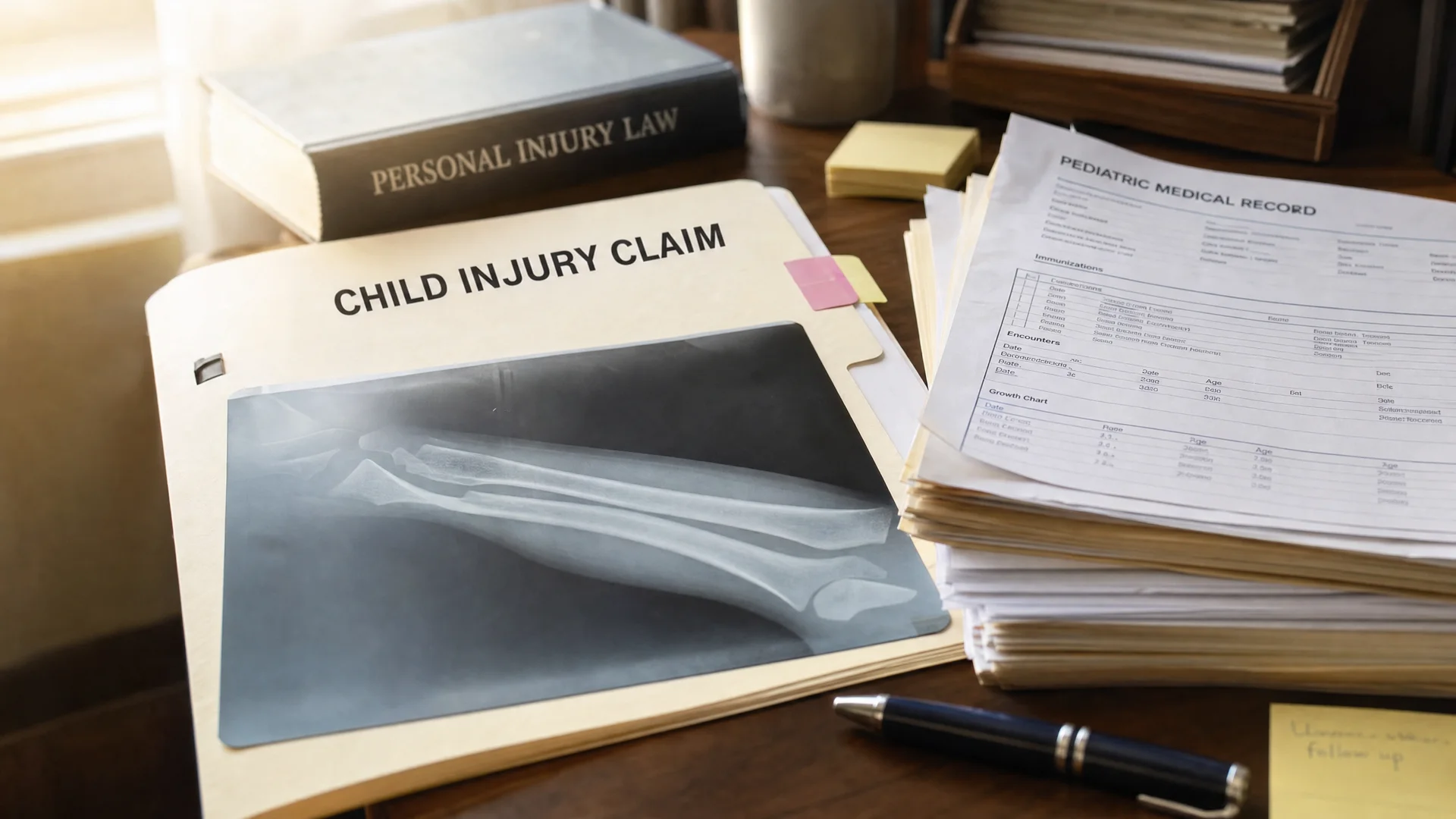
- Medical Record Collection and Expert Review. I gather every record from emergency treatment, hospitalization, and follow-up care. Pediatric trauma care teams, including physical therapists, occupational therapists, and psychologists, generate records that translate directly into past and future damages. We work with medical experts to interpret what those records mean for your child's future.
- Demand, Negotiation, and Litigation. Once we have a complete damages picture, we submit a formal demand to the insurer. Most child injury cases settle before trial, but I prepare every file as if it is going to a jury. If the insurer refuses a fair number, we file suit. I am admitted to the U.S. District Courts for the Southern and Middle Districts of Florida and handle federal and state court filings.
- Court Approval of the Minor's Settlement. Any settlement for a child in a pending lawsuit requires court approval under Florida law. I handle the petition, the guardian ad litem coordination, and the hearing itself. Once approved, the funds are protected and properly structured for your child's benefit.
What I Got Wrong Early in My Practice
I'll be honest about how I used to explain timing in child injury cases. Early on, I was too gentle about it. I assumed families had already grasped that minority tolling might not protect them. That assumption was wrong.
The belief that a child's claim is preserved until they turn 18 is one of the most widespread and damaging myths in Florida personal injury law. Parents show up in my office three or four years after their child was hurt, certain the clock has not run. I then have to deliver the worst kind of news: the claim is time-barred.
The Florida Bar's consumer resources make the point clearly, urging people to consult an attorney early. That is now the first thing I say on every child injury intake call. I say it plainly: the two-year clock under §95.11(5)(a) likely started on the day your child was hurt. Call me today, not next year.
Related Claims That Often Arise Alongside Child Injuries
Child injury cases rarely stand alone. A crash that hurts a child passenger may also carry a trucking accidents claim if a commercial vehicle was involved. If the child was riding in a rideshare, an Uber/Lyft accidents claim may run alongside it.
A child who suffers a catastrophic injury, brain damage, spinal cord injury, or limb loss, requires full life care planning and structured settlement analysis. If the child dies from those injuries, the claim becomes a wrongful death action under Florida's Wrongful Death Act. That action carries a two-year filing window and a distinct set of eligible survivors and damages. Our Wrongful Death page explains how that framework works.
A parent badly hurt in the same incident may hold their own catastrophic injuries claim. Separately, the child may hold a loss-of-parental-consortium claim under Fla. Stat. §768.0415 if the parent suffers permanent total disability.
Premises-related child injuries tell a similar story. A fall through a rotten deck or a pool gate that was never installed can also generate slip and falls and trip and falls claims for any adult hurt in the same event. I map all of this out during the initial case evaluation so nothing gets missed.
Frequently asked questions
How long does a family in South Florida have to file a child injury lawsuit?
Can a parent settle a child's injury claim in Florida without going to court?
Who can be held liable when a child is injured at school?
What damages can a seriously injured child recover in Florida?
Does Florida's modified comparative fault rule apply to child injury cases?
Ready to get started?
Reach out today for a fast, no-pressure quote.
This page is for general informational purposes and is not professional, legal, or medical advice. Sean Goldstein can advise on your specific situation, contact us for a consultation. Licensed: FL Bar #1018013.