
South Florida Catastrophic Injury Lawyer
A South Florida catastrophic injury lawyer who builds your claim from life care plans to IME defense. Free consultation, 7 days a week. Call.
A catastrophic injury changes the math of your whole life, not just your next hospital bill. The costs that matter most, lost income, home modifications, and the years of medical and psychological care most survivors need, rarely show up in an insurer's first offer. A catastrophic injury lawyer who builds lifetime cost projections from real medical records, vocational reports, and life-care plans gives you a real shot at a recovery that holds up.
I am Sean Goldstein, a personal injury attorney at Leeder Law. I hold a Juris Doctor and a Master of Business Administration, both from Florida State University, and I handle catastrophic and serious injury cases, including explosions, commercial trucking collisions, motor vehicle accidents, premises liability, and defective products. I have been part of more than 350 cases and have helped recover over $26 million for injured clients (prior results do not guarantee a similar outcome). I represent clients across Palm Beach, Broward, and Miami-Dade counties, and you can reach me directly about your case.
What Qualifies as a Catastrophic Injury?
Florida courts and medical professionals treat "catastrophic injury" as a functional standard, not a diagnosis. The injury must permanently and severely limit a person's ability to work or carry out basic life activities.
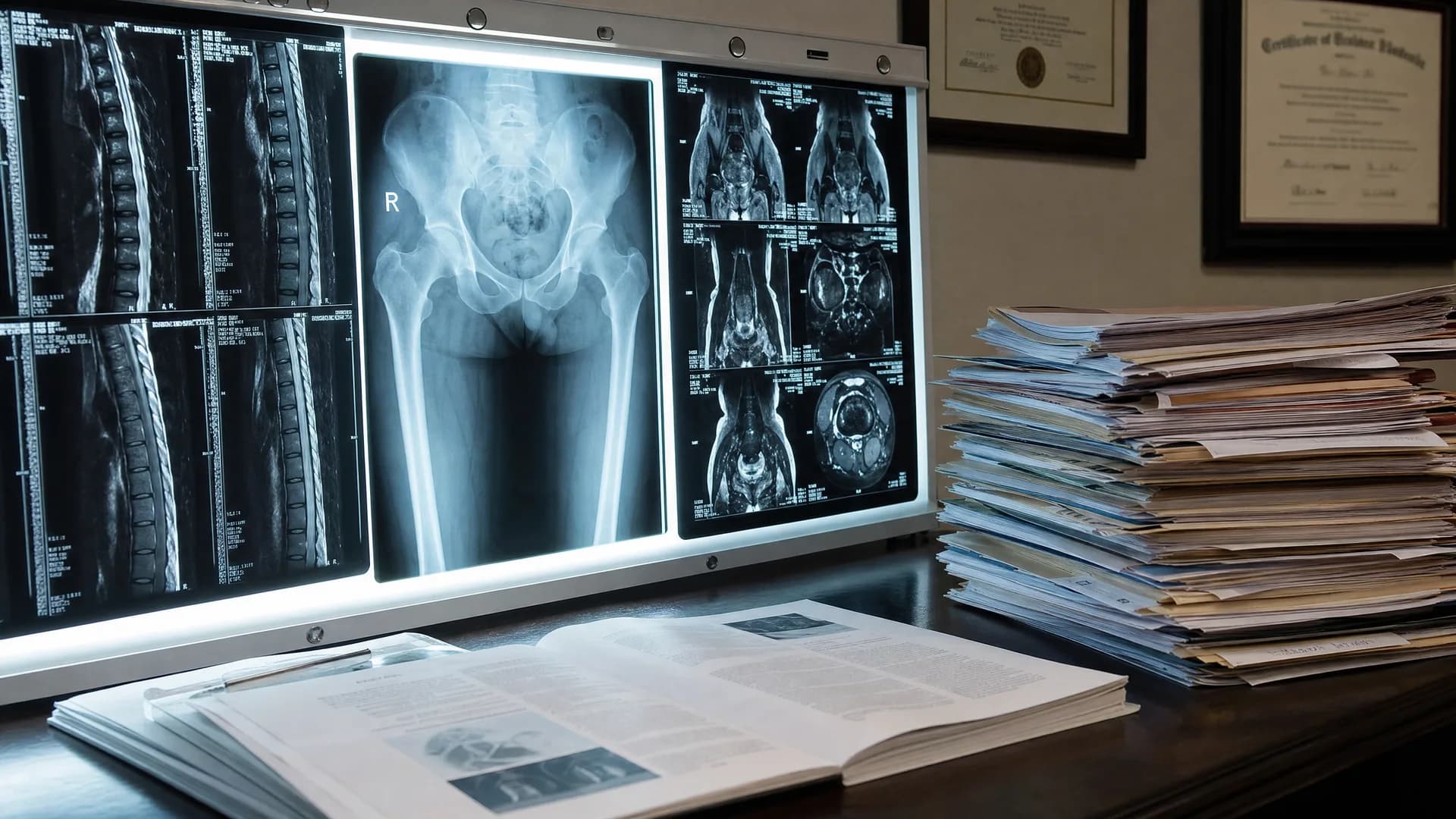
Spinal cord damage, traumatic brain injury, full or partial amputation, severe burns covering a large body surface area, and total or near-total vision or hearing loss all typically qualify. Cognitive injuries qualify too, when properly documented. That includes acquired brain injury without visible trauma, severe PTSD, and major depressive disorder tied to physical trauma.
Many people I speak with do not realize their psychological injuries carry real compensable value. They are told to focus on the physical claim. That framing leaves money on the table. If a crash or fall produced a diagnosis that limits your daily function, you need a catastrophic injury attorney reviewing your full picture, not just the orthopedic records.
Common Causes of Catastrophic Injuries in South Florida
South Florida's roads and job sites create real, specific dangers. I-95, Florida's Turnpike, and the Palmetto Expressway carry some of the heaviest commercial truck traffic in the Southeast. When a loaded 18-wheeler hits a passenger car at highway speed, spinal cord injuries and TBIs are common results.
Trucking accidents rank among the most complex catastrophic cases I handle. Liability can fall on the driver, the carrier, the shipper, and sometimes the truck or parts manufacturer, all at once. Car accidents at surface-street speeds can be just as devastating, especially rear-impacts at 40-plus mph. Motorcycle accidents show up in catastrophic injury data far out of proportion to their numbers, because riders have no physical protection between them and the pavement.
On job sites, falls from scaffolding and roof edges remain a leading cause of spinal and brain injury. Slip and falls and trip and falls in retail spaces and parking structures produce serious injuries too, particularly among older adults. Animal attacks, Uber/Lyft accidents, and incidents involving child injuries, including pool drownings and playground falls, round out the most common scenarios I see across South Florida.
- Spinal Cord Injuries. Complete or incomplete cord injuries causing paralysis, loss of sensation, or bowel and bladder dysfunction. Liability investigation covers vehicle data, road design, and construction site conditions.
- Traumatic Brain Injury. TBI ranges from concussion to diffuse axonal injury (widespread nerve-fiber damage). Neuropsychological testing and fMRI imaging are often required to document deficits the naked eye cannot see.
- Amputation and Limb Loss. Prosthetic limbs require replacement every 3-5 years on average. A life care plan must account for that full replacement cycle, not just the initial fitting, or the recovery will fall short within a decade.
- Severe Burns. Burns covering more than 20% of the body surface area typically require multiple surgeries, skin grafting, and years of rehabilitation. Occupational therapy and psychological support are standard components of care.
- Cognitive and Psychological Injuries. Severe PTSD, acquired brain injury, and major depression tied to a traumatic event are fully compensable when documented by a treating psychiatrist or neuropsychologist and supported by functional assessments.
How I Build a Catastrophic Injury Claim
Most injury pages list what they handle and tell you they will fight for you. I would rather walk you through what the work actually involves.
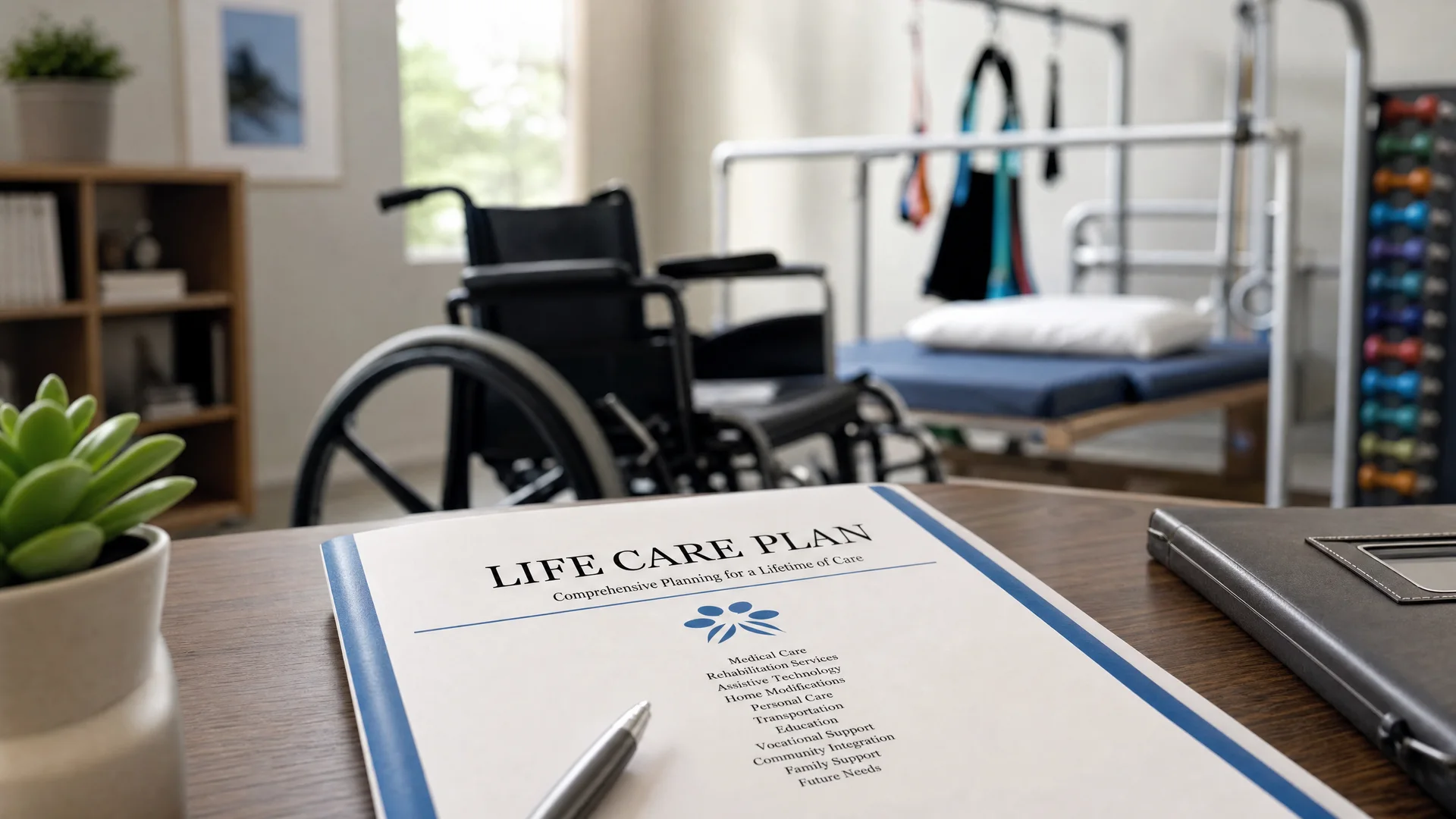
It starts with medical stabilization and document collection. That means pulling every emergency record, imaging study, operative report, and discharge summary before anything else happens. From there, I bring in a certified life care planner, a credentialed specialist who projects every future medical cost, from surgeries, therapy, and equipment to home modifications and nursing or attendant care. The projection is grounded in current pricing data and peer-reviewed life expectancy tables.
After that, a vocational rehabilitation expert reviews your work history and assesses what you can and cannot do following the injury. A forensic economist then converts that lost earning capacity into a present-value figure a jury or insurer can actually evaluate. Those three reports together form the core of a catastrophic injury claim. Each one takes time to build properly.
Insurers know this. That is exactly why they push early settlements before those reports exist. An early offer almost always undervalues a catastrophic case by a wide margin.
Countering Defense IMEs
When serious money is on the line, the defense orders an independent medical examination, called an IME. A physician paid by the insurer performs it. The word "independent" does not hold up under scrutiny. These doctors are chosen and paid by the defense. Their reports almost always downplay the severity of your injuries or challenge the need for future treatment.
I prepare clients for IMEs before the appointment ever happens. I go through what the defense doctor is likely to zero in on. I walk my client through how to describe symptoms accurately and completely, nothing left out and nothing overstated. When an IME report misrepresents the medical picture, I bring in the treating physician to respond in writing.
At deposition, the IME doctor faces pointed questions. Billing records come into play. The percentage of income that doctor earns from defense referrals comes into play. Whether the doctor actually reviewed the full medical file comes into play. That kind of preparation shapes what the record looks like far more than most clients expect.
Lost Earning Capacity for Non-Traditional Workers
Earning capacity fights get ugly fast when the injured person is self-employed or works gig jobs. I used to underestimate just how contested this piece of a case could become. Standard wage records show W-2 income. But a self-employed contractor, a rideshare driver, or a freelance worker may earn far more than their tax returns reflect. Cash transactions and business deductions often reduce reported income. Insurers dig into that gap hard.
So I build earning capacity arguments from multiple data sources. Bank records, client contracts, industry wage surveys, and vocational expert testimony about the claimant's specific skill set and market all matter. The goal is to show what the person was actually earning, and what they would have earned across a full working lifetime, not just what a single tax return captures.
This matters even more here in South Florida. Informal income and entrepreneurial work show up across every industry and demographic in this region. A forensic economist can reconstruct earnings using a credible methodology, one that survives a Daubert challenge, which is the legal standard courts apply when deciding whether expert testimony is reliable enough to go before a jury in federal and Florida state court.
Medicare, Medicaid, and Workers' Comp Intersections
A catastrophic injury settlement rarely lands in your pocket clean. If Medicare or Medicaid covered any part of your treatment, those programs typically hold a lien, a legal right to be repaid from your settlement. Ignore that lien and you can face repayment demands after the case is already closed.
When Medicare is involved and your injury requires future medical care, a Medicare Set-Aside (MSA) may be required. An MSA is an allocation of settlement funds set aside specifically for future injury-related treatment that Medicare would otherwise cover. The Centers for Medicare and Medicaid Services (CMS) reviews MSA amounts when cases cross certain thresholds. Getting that allocation right matters. Done wrong, it can put your future coverage at risk.
Workers' compensation adds another layer. Coordination-of-benefits rules govern how both claims interact and which liens attach. The sequencing here is not guesswork. I work with MSA specialists and coordinate with workers' comp counsel when the two claims overlap. The Florida Department of Financial Services offers consumer resources on insurance claims and coverage rights that can help you understand what your insurer owes you at each stage.
Handling a Catastrophic Claim Alone vs. With Counsel
| Factor | Without a Catastrophic Injury Lawyer | With Sean Goldstein |
|---|---|---|
| Life Care Plan | Rarely obtained, too expensive without contingency backing | Retained early; drives the valuation before any offer is made |
| IME Defense | No preparation; client walks in cold | Pre-IME briefing, treating physician rebuttal, deposition strategy |
| Lost Earning Capacity | Based on tax returns only; gaps exploited by insurer | Built from bank records, contracts, vocational expert, forensic economist |
| Medicare / Medicaid Liens | Often missed; post-settlement repayment demands follow | Identified early; MSA structured to protect future benefits |
| Multi-Defendant Identification | Typically one defendant named; others missed | Full liability investigation: drivers, carriers, owners, manufacturers |
| Case Timeline Clarity | Unknown; client has no benchmark | Realistic stage-by-stage timeline set at first call |
- Intake and Evidence Preservation. The first call sets the clock. I issue preservation letters to defendants, employers, and insurers immediately. Dashcam footage, surveillance video, and black-box (EDR) data disappear fast. Securing that evidence early often determines whether liability can be proven at all.
- Medical Record Collection and Expert Retention. I gather every treatment record and bring in the life care planner, vocational expert, and forensic economist. This phase can take several months if the client is still treating. I do not rush the demand before the medical picture is complete.
- Demand and Insurer Negotiation. Once the expert reports are ready, I send a demand package to the insurer. That package includes the life care plan, the vocational and economic reports, and supporting medical evidence. Negotiation follows. Many catastrophic cases resolve here, though the timeline varies widely by insurer and claim complexity.
- Litigation and Discovery. If the insurer does not offer fair value, I file suit. Discovery includes depositions of the defendant, any eyewitnesses, and the defense's IME doctor. Expert witnesses are disclosed and deposed. Florida courts have specific case management timelines that govern how litigation proceeds through the system. Florida Courts publishes the structure of how civil cases move through the state court system.
- Resolution: Settlement or Trial. Most cases settle before trial, but I prepare every catastrophic injury file as if it is going to a jury. Mediations are common after discovery closes. If the case goes to trial, the jury hears from treating physicians, life care planners, and vocational experts. I present the full picture of what my client's life now costs and what it would have earned.
Florida Law, Deadlines, and Comparative Fault
Under Florida Statutes §95.11(5)(a), a negligence-based personal injury claim must be filed within 2 years of the date the injury occurred. This applies to causes of action that accrued on or after March 24, 2023. Miss that deadline and the case is gone, with no exceptions.
Florida also uses modified comparative fault under Fla. Stat. §768.81. If a jury finds you more than 50% responsible for your own injury, you recover nothing. If you are 50% or less at fault, your recovery is reduced by your share of the blame. That rule turns shifting fault onto the injured person into the defense's first move in catastrophic cases. I know that playbook. I build the liability case to answer it before they run it.
The Florida Bar's consumer information page explains what to look for when hiring a personal injury attorney and how contingency fee arrangements work. I handle catastrophic injury cases on contingency. My fee is a percentage of the recovery, following the presumptively reasonable rates set under the Rules Regulating the Florida Bar. No recovery means no fee, though costs advanced during the case may still apply.
Related Reading on Catastrophic and Serious Injury Claims
Catastrophic injury claims don't exist in isolation. They connect to other serious injury types in ways that matter to your case. Wrongful death claims come into play when a catastrophic injury turns fatal. The process, the damages rules, and the deadlines work differently than a standard personal injury claim. If the crash involved a rideshare driver, Uber/Lyft accidents bring layered insurance questions that determine which policy applies and when.
The law firm practice page lays out the full range of injury services I handle across South Florida. For deeper reading on specific topics, I've published articles on life care planning in Florida injury claims, how defense IMEs work and how to prepare for one, what a Medicare Set-Aside means for your settlement, proving lost earning capacity without W-2 income, and preserving electronic evidence after a serious crash.
These are the topics that decide catastrophic cases. I write about them in plain language because a client who understands the process is in a far better position to make good decisions.
Frequently asked questions
What counts as a catastrophic injury in Florida?
How long do I have to file a catastrophic injury claim?
What is a life care plan and why does it matter?
Can I recover if I was partly at fault?
What is a defense IME?
Does a settlement affect my Medicare or Medicaid benefits?
Does Sean Goldstein handle cases on contingency?
Ready to get started?
Reach out today for a fast, no-pressure quote.
This page is for general informational purposes and is not professional, legal, or medical advice. Sean Goldstein can advise on your specific situation, contact us for a consultation. Licensed: FL Bar #1018013.