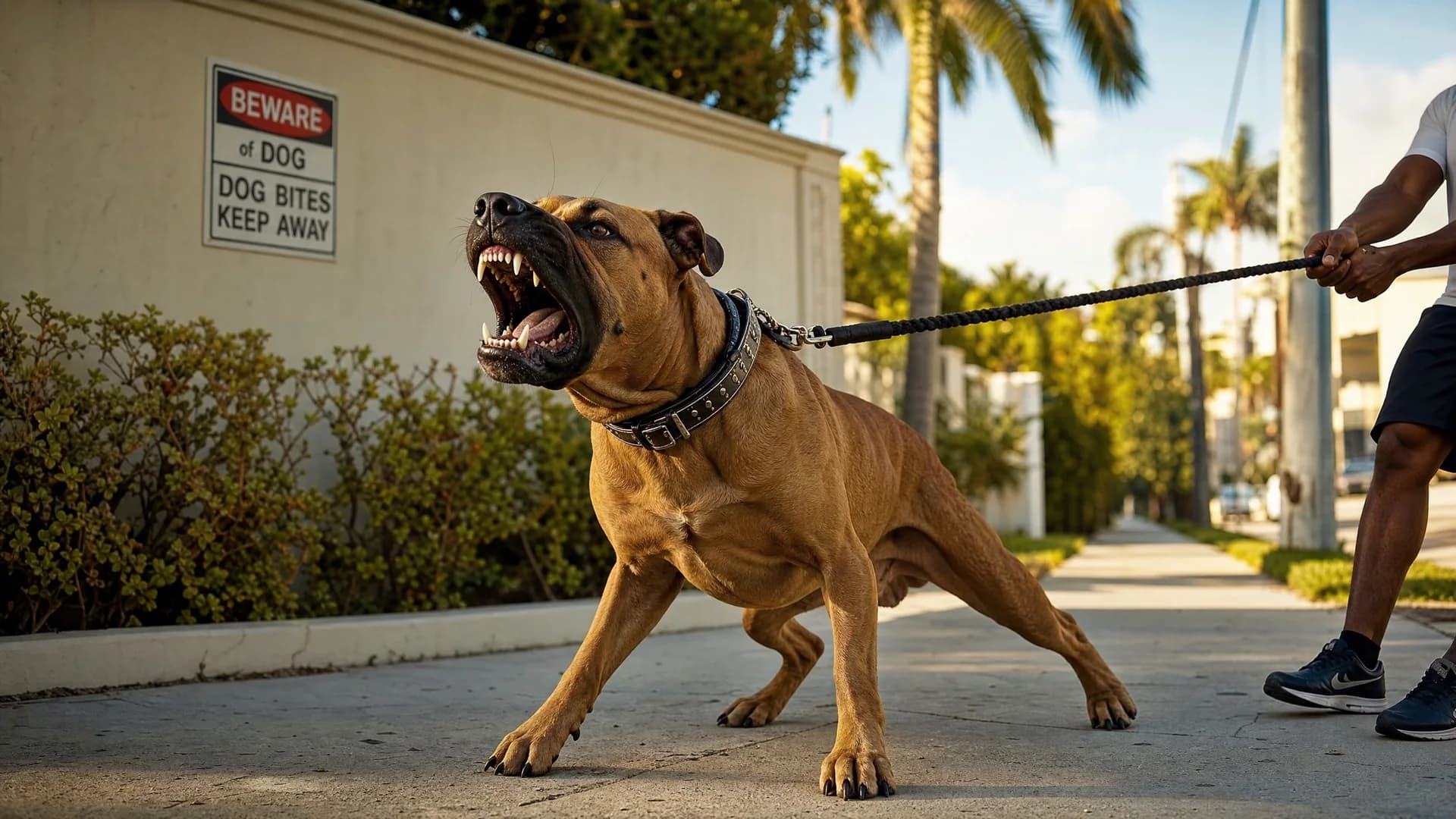
Animal Attacks: Your Legal Rights in South Florida
Bitten or attacked in South Florida? Animal attacks trigger strict liability under Florida law. Free consultation. Reach me directly about your case.
About 4.5 million dog bites occur in the United States every year, according to peer-reviewed data published in Injury Epidemiology. Most never make the news. They become hospital bills, missed paychecks, and questions nobody answers. If you or someone you love was attacked by a dog, a loose animal, or any other creature in South Florida, the law gives you real remedies, not just sympathy. Florida is a strict-liability state for dog bites, and that matters. You do not have to prove the owner knew the dog was dangerous, that it had bitten before, or that any warning existed. Under Fla. Stat. §767.04, one bite from an otherwise friendly family pet triggers the owner's liability. I handle animal attack cases across Palm Beach, Broward, and Miami-Dade counties. I want you to understand your rights before the insurance company gets to shape the story.
Florida's Strict-Liability Law for Animal Attacks
Florida's animal attack law is among the strongest victim-protection statutes in the country. Under Fla. Stat. §767.04, a dog owner is liable for damages when their dog bites someone in a public place or lawfully on private property, including the owner's own property. The statute expressly throws out the old common-law "one free bite" rule. Prior viciousness, a prior incident, and the owner's knowledge of any dangerous tendency are all irrelevant to your claim. That is a powerful place to start.
The word "lawfully" carries real weight here. You are lawfully on someone's property when a state or federal duty brings you there, such as a mail carrier making a delivery, or when the owner has extended an express or implied invitation. Trespassers do not get the benefit of §767.04's strict-liability protection. That said, a trespasser may still have a negligence claim under different theories, depending on the facts.
I look at every case on its own terms. The detail that seems minor to you may turn out to be the one that matters most.
What Compensation Can Animal Attack Victims Recover?
Animal attacks leave damage that runs well past the emergency room. Puncture wounds get infected. Tendons and nerves tear. Facial bites leave permanent scars. The psychological toll, anxiety, post-traumatic stress, a lasting fear of animals, is real and it is compensable. I work to put every category on paper before any settlement talk begins.
Medical expenses cover past and future treatment: ER care, wound closure, plastic surgery, physical therapy, and whatever ongoing care your doctor orders. Lost wages cover the income you missed during recovery, plus any drop in earning capacity if your injuries limit what you can do long term. Scarring and disfigurement stand as their own damage categories under Florida law. They are not just a line inside pain and suffering. Emotional distress damages are available too, and they are among the first things an adjuster tries to minimize or ignore when a victim settles without a lawyer.
Insurance adjusters are trained to close files fast and cheap. My job is to make sure every legitimate piece of your loss is accounted for before anyone talks numbers. I also handle related claims, including cases that cross into catastrophic injuries caused by severe maulings.
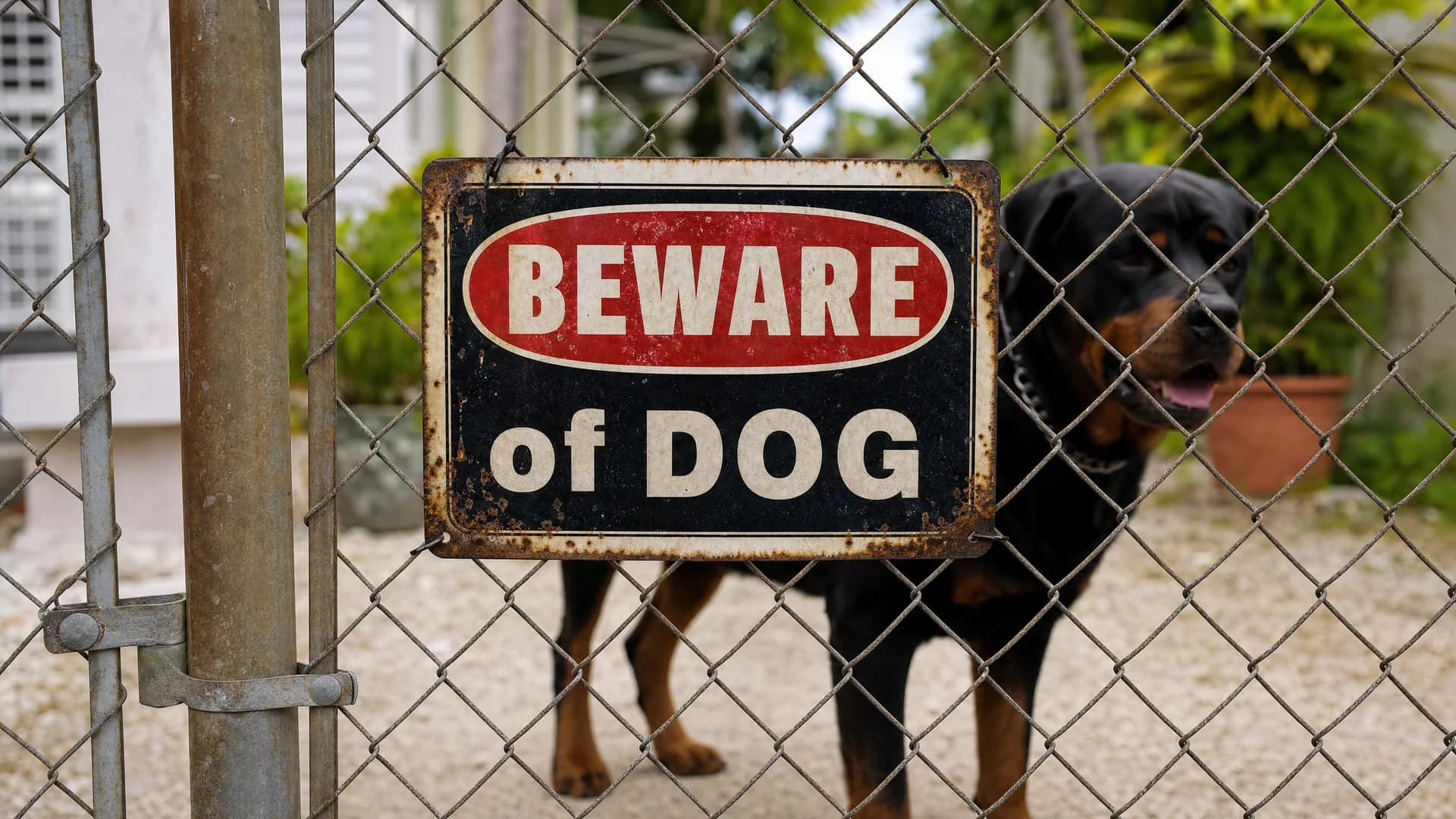
How Insurance Companies Fight Animal Attack Claims
Homeowners' insurers fight dog bite claims harder than most people expect. I learned that early. Strict liability sounds like it should produce fair settlements quickly. It does not. Insurers run the same plays every time: they argue the victim provoked the dog, they call the bite minor, or they push a fast low offer before the victim understands how serious the injury actually is. Provocation is a real defense under §767.04, but it is far narrower than insurers let on. Accidentally stepping close to a dog is not provocation. Reaching toward a dog in a calm, ordinary way is not provocation. Insurers stretch the concept because unrepresented victims often accept the argument and walk away. The modified comparative fault rule under Fla. Stat. §768.81, which took effect with HB 837 in 2023, bars recovery entirely when a victim is found more than 50% at fault. That threshold gives insurers a concrete reason to push fault arguments hard in every single case. I push back with evidence. Witness statements, medical records, animal control reports, and any surveillance footage available all matter. Documentation built in the first days after the attack is the foundation of a viable claim. I also track the evolving interaction between §768.81(6)'s bar and §767.04's own comparative reduction clause closely, because that area of Florida law is still developing and it affects my clients directly.
With Counsel vs. Without: Animal Attack Claims
| Factor | With Legal Representation | Without Legal Representation |
|---|---|---|
| Damage categories documented | All categories: medical, lost wages, scarring, emotional distress, future care | Typically limited to current medical bills the adjuster acknowledges |
| Provocation defense | Challenged with evidence; legal standard applied correctly | Accepted at face value; victim may concede fault they don't legally owe |
| Early settlement pressure | Evaluated against full injury picture; signed off only when appropriate | Often accepted before full injury scope is known |
| Filing deadline tracking | Monitored; suit filed if settlement not reached before the 2-year deadline | Risk of missing Florida's 2-year statute of limitations |
| Animal control & police records | Obtained and analyzed as part of the evidentiary file | Often not requested; adjuster controls the record |
| Legal fees | Contingency fee, no fee unless recovery; see The Florida Bar for fee guidance | No upfront cost but unrepresented victims routinely recover less |
- Seek Medical Care Immediately. Animal bites, especially dog bites, carry a high infection risk. Go to an emergency room or urgent care right away, even if the wound looks minor. Puncture wounds can close over bacteria. Document every diagnosis, treatment, and discharge instruction. This medical record is the foundation of your claim.
- Report the Attack to Animal Control. File a report with the local animal control authority in the county where the attack happened, whether that is Broward, Palm Beach, or Miami-Dade. This creates an official record, triggers an investigation into the animal's history, and may initiate a dangerous-dog classification proceeding under Chapter 767.
- Photograph Everything. Take photos of your injuries before they are cleaned or bandaged, and again each day for the first two weeks. Photograph the location where the attack happened, the animal if it is safe to do so, and any torn or bloodied clothing. Visual evidence is often the most persuasive evidence in an animal attack case.
- Collect Witness Information. Get the names and phone numbers of anyone who saw the attack or arrived shortly after. Witness accounts about how the incident unfolded can directly counter a provocation argument raised by the owner or their insurer.
- Contact an Attorney Before Insurers Contact You. The owner's homeowners' insurer may reach out within days. Do not give a recorded statement before speaking with a lawyer. I offer a free consultation and handle animal attack cases on a contingency basis, meaning you pay no fee unless we recover for you. Review The Florida Bar's consumer guidance for more on how contingency fees work in Florida.
Wild Animals, Alligators, and Premises Liability
Florida's dog-bite strict-liability statute covers dogs. Wild animal attacks are a different legal question entirely. Under Florida common law, the ferae naturae doctrine generally shields property owners from automatic liability for injuries caused by native wild animals, including alligators. A duty can still arise in narrow, fact-specific circumstances: where the owner harbored the animal, introduced a non-indigenous species, or had superior knowledge of an unreasonable and foreseeable risk the victim could not guard against. The Florida Bar Journal's article on owner and HOA liability for wild animal attacks addresses this doctrine in detail. What that means on the ground: if an alligator attacked you at a community lake in a South Florida HOA, whether the HOA bears any liability turns on specific facts. Did residents report prior sightings? Did the HOA take any steps to address the hazard? This is not settled, broadly applicable law. It is a fact-by-fact analysis, and the outcome shifts with the record. If someone you love died in a wild animal attack, the wrongful death framework under Fla. Stat. §95.11(5)(e) applies, and I handle those cases as part of my wrongful death practice.
The Hot Take: Stop Blaming the Breed
Most people, including some lawyers, frame animal attack cases around the dog's breed. That is the wrong lens. Florida's strict-liability statute does not ask what breed the dog is. It asks whether you were lawfully present and whether you were bitten. The owner's responsibility sits at the center of the analysis, not the animal's genetics. When a case fixates on breed, it pulls attention away from what actually matters: Did the owner control access to the animal? Did the owner comply with local leash ordinances? Did the owner place the animal in a setting where a bite was foreseeable, even if no prior bites had ever occurred? Breed debates also invite jurors to sympathize with owners in ways that do not serve victims. I build cases around owner conduct and foreseeable risk. That approach is more grounded in what the law requires and more persuasive to a jury. Cases involving attacks on children often overlap with my child injuries practice, where the legal duties owed to young victims carry additional weight. If the attack happened on someone's property and involved a different kind of incident, slip and falls and trip and falls share similar premises-liability principles worth understanding.
Filing Deadlines and What Happens If You Wait
The deadline under Fla. Stat. §95.11(5)(a) is not a suggestion. For animal attack claims that accrued on or after March 24, 2023, the clock starts on the date of the attack. Miss that window and the court will typically dismiss the case, with no review of the facts and no second chance.
Two years sounds like plenty of time. It is not. I have watched that window close on people who were still in treatment, still focused on getting better, or still talking to an insurer who had no real intention of paying. That last scenario is worth naming plainly: some insurers drag out negotiations specifically to run down the clock. I have seen it happen.
Filing suit is not the same as going to trial. Many cases settle in mediation or through direct negotiation long before a trial date is ever set. But filing is what locks in your rights. I walk through how Florida civil cases move through the court system, using Florida Courts as a reference, during every initial consultation.
If you were hurt in a related incident, such as a car accident or a trucking accident where animals were a factor, different timelines and liability theories may apply. My law firm handles the full range of serious personal injury cases across South Florida. I also handle related matters, including uber lyft accidents and motorcycle accidents.
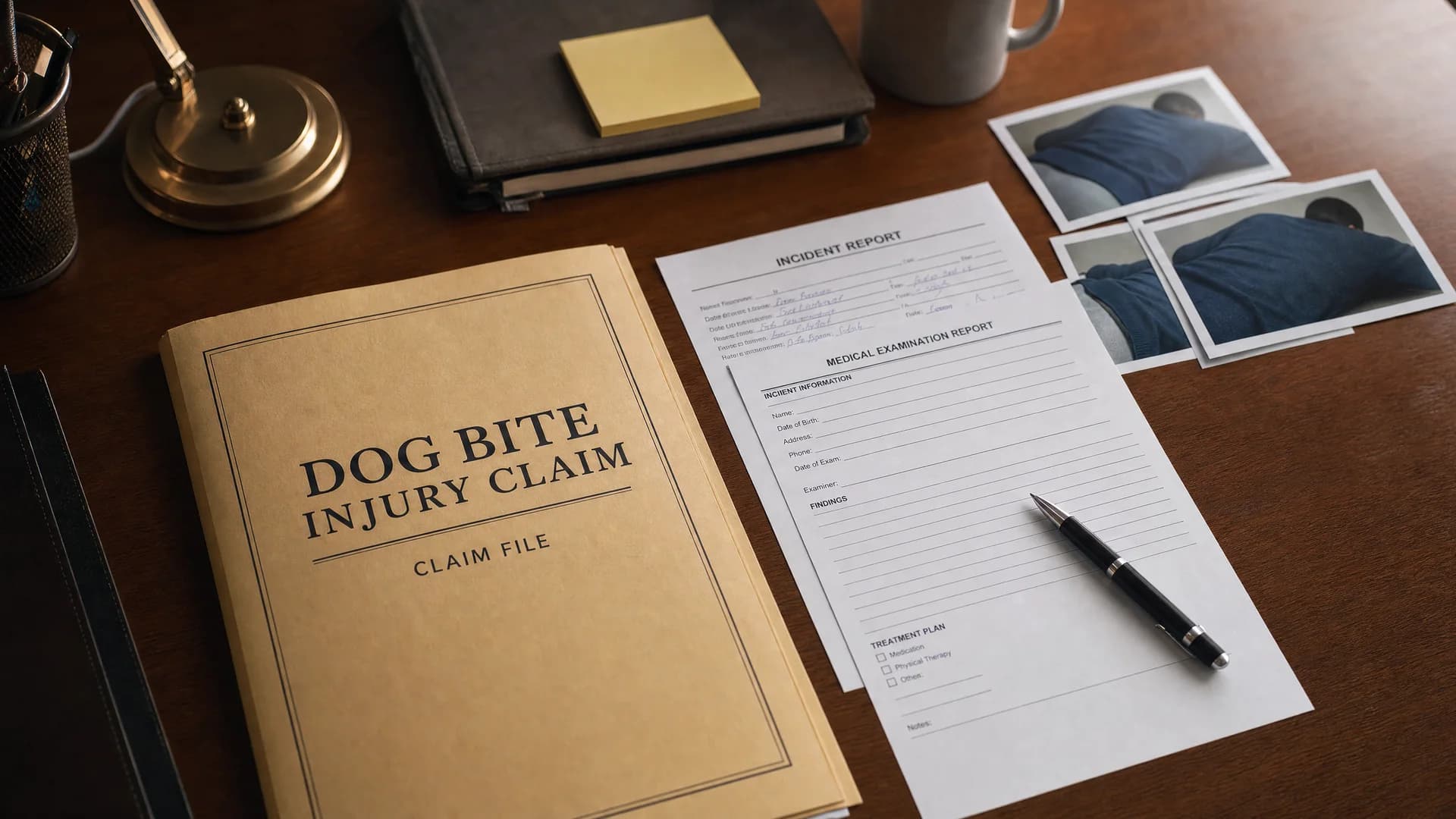
- ER and Follow-Up Records. Every visit, every diagnosis, and every treatment recommendation goes into the file. Gaps in medical treatment give insurers an argument that the injury was not serious.
- Animal Control Report. This official record documents the incident, the animal's history, the owner's information, and any prior complaints or bite reports associated with that animal.
- Photographic Evidence. Take dated photographs of wounds, the attack location, and any property conditions that contributed to the attack. Photos taken days after the event often show bruising and swelling not visible on day one.
- Wage Loss Documentation. Pay stubs, employer letters, and tax records establish your pre-injury earnings and the income you lost during recovery.
- Psychological Treatment Records. If you are experiencing anxiety, nightmares, or post-traumatic symptoms, treatment records from a therapist or psychiatrist document emotional distress as a compensable injury, not just an abstract claim.
Frequently asked questions
Does Florida require a prior bite before suing a dog owner?
How long do I have to file an animal attack claim in Florida?
What if the insurer says I provoked the dog?
Does the 'Bad Dog' sign protect an owner from liability?
Can I recover if I was partly at fault for the attack?
Are wild animal or alligator attacks treated the same as dog bites?
What does a contingency fee mean for my animal attack case?
Ready to get started?
Reach out today for a fast, no-pressure quote.
This page is for general informational purposes and is not professional, legal, or medical advice. Sean Goldstein can advise on your specific situation, contact us for a consultation. Licensed: FL Bar #1018013.